Hello Branch Families!
What a fun and fast-paced month it has been! April was filled with science experiments, art, reading, and writing- all centered around one thing… the WEATHER! That’s right, our Branchers turned into little meteorologists throughout the month. These Branchers continue to impress us with their brightness, attentiveness, and capability!
We started the month by learning about clouds. We discussed what clouds are made of and how they work, and, most importantly (according to the Branchers), they were fascinated by the names of the four most common clouds. You may have heard your Brancher talking about these different types of clouds, as did we! These clouds are the Cirrus, Cumulus, Cumulonimbus, and Stratus clouds. We learned that when you look up at the sky and see white, fluffy, happy cotton-ball clouds, you are looking at a Cumulus cloud. On the other side of the spectrum, if we see a dark and stormy cloud, we are looking at a Cumulonimbus cloud…run for cover because there is soon to be a thunderstorm! The highest clouds that we see are Cirrus, which are light, feathery, wispy, and the coldest type of clouds. The lowest clouds are our Stratus clouds…also known as fog. These clouds blanket the ground with their density. It has been so fun listening to each Brancher pronounce and stretch out each cloud type as they expand their vocabulary!
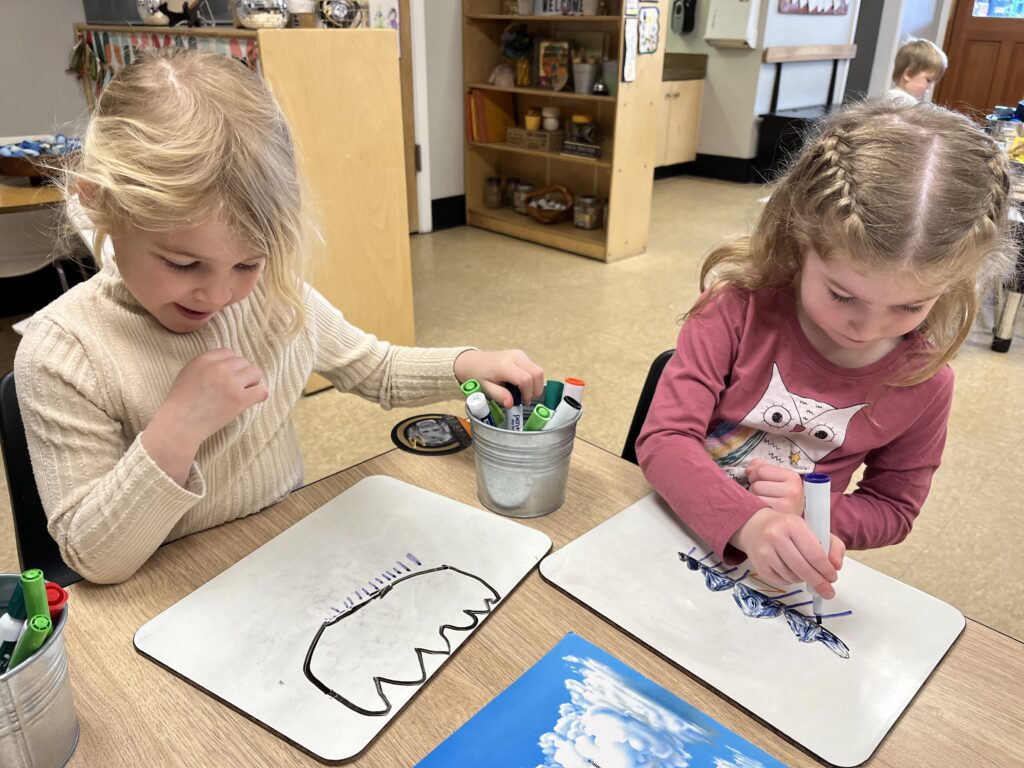
We can’t learn about clouds without understanding the WATER CYCLE. So, off we go to explore this essential series of events. We studied Evaporation, Condensation, and Precipitation using helpful books, videos, and, of course, songs! To spark our imaginations and add visual elements, our whole group made our very own ‘Water Cycle’ in a bag! Using a Ziploc bag and some permanent markers, the Branchers helped a teacher create the right landscape. We drew water, sunshine, clouds, trees, and even Mt. Bachelor. After decorating the bag, we talked about the steps of the water cycle and added them to our landscape. The Branchers found that when the sun heats water, it evaporates into water vapor. This vapor rises into the sky and gathers to form clouds. When clouds fill with water, they release it as precipitation, and the cycle starts again. Once we finished the bag and our discussion, we filled it with H2O and hung it in the window to see the science happen firsthand! By the end of the first day, the Branchers saw condensation forming on the bag’s side and watched in amazement as water trickled inside.
Another fantastic visual activity we did was the ‘Rain Cloud’ in a jar. This activity was excellent for showing our Branchers how rain forms, and it was really simple too! All we needed was a jar, water, shaving cream, and a little blue food coloring. You start by filling the jar with warm water and topping it with a shaving cream cloud. Then add some drops of food coloring and imagine that it is water vapor. Once the vapor in the cloud becomes too heavy, it travels through the cloud and starts to rain through the water. This would be a great activity to do at home as well; have your Brancher assist or lead the demonstration!
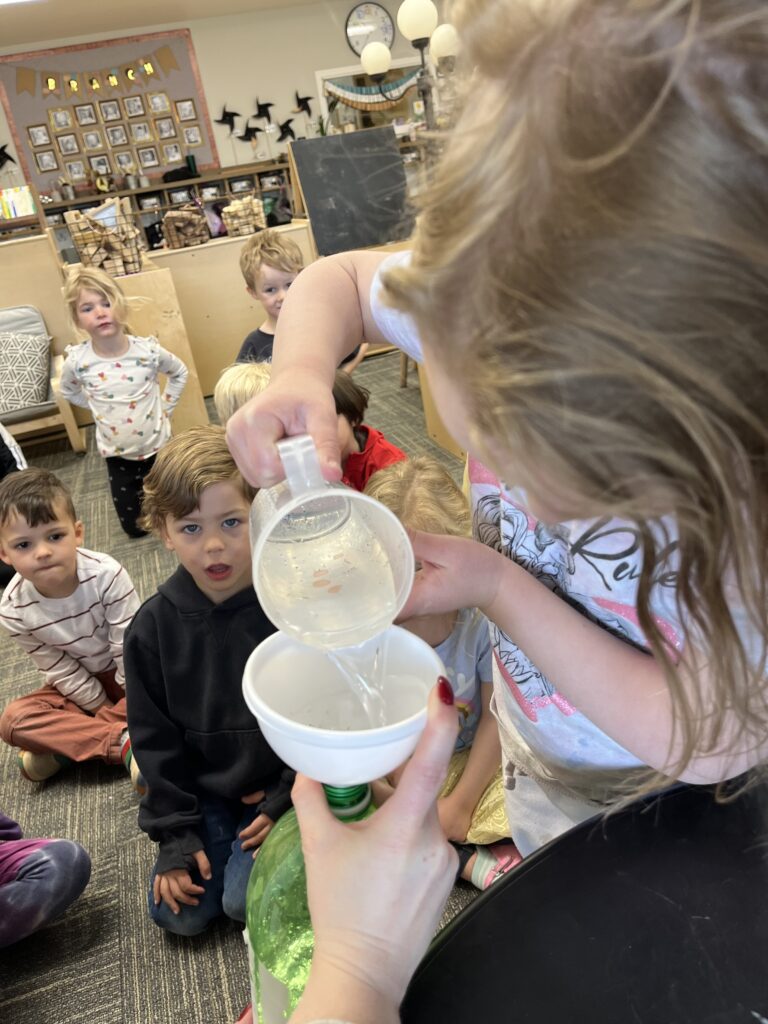
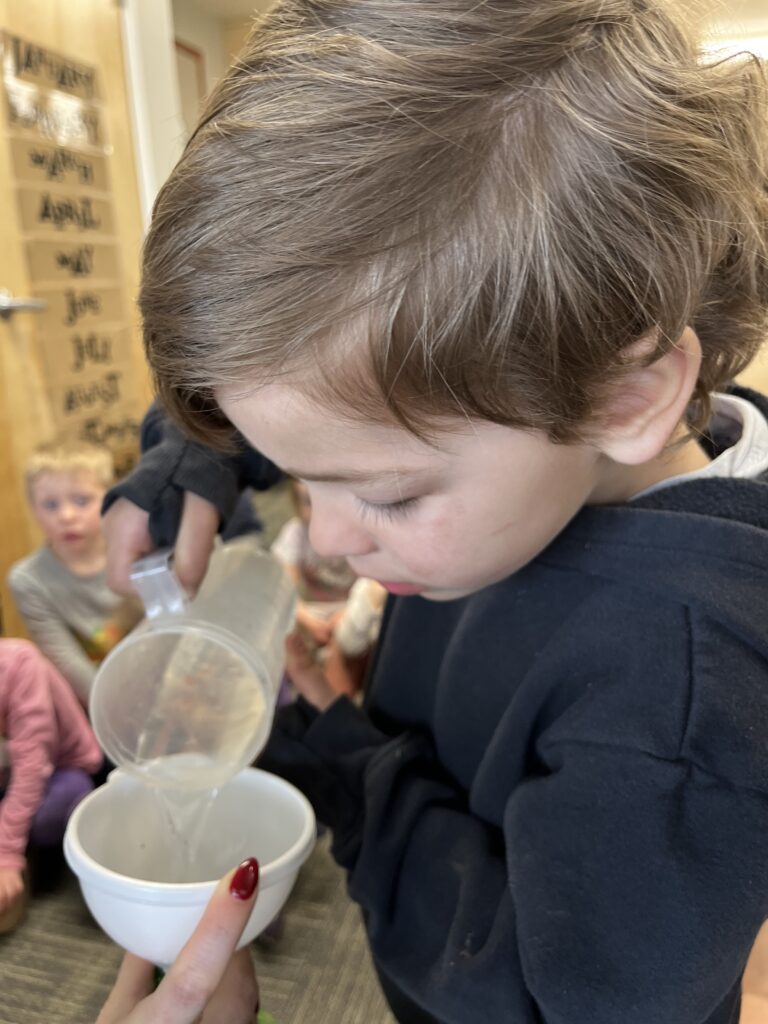
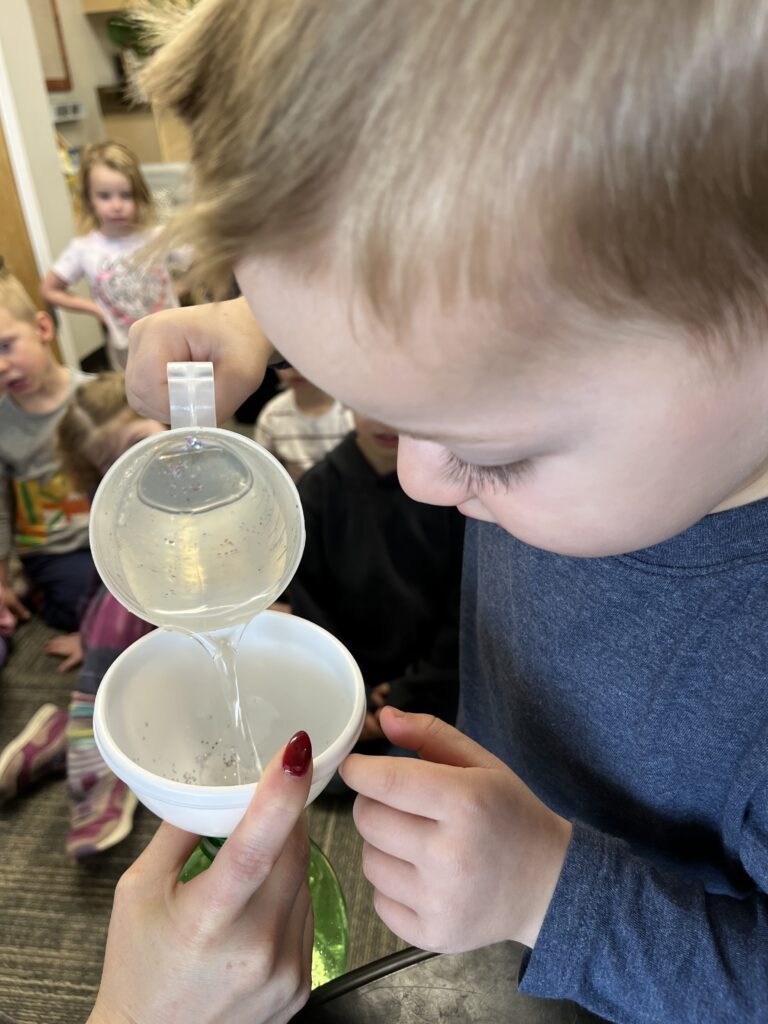
That wasn’t the only thing we did in a jar this month. We also created a… ’Tornado’! Using just blue H2O and glitter, we made a way to mimic an actual tornado. We used our imaginations to pretend that the glitter was dirt and dust flying and swirling through the air during a tornado. Using two plastic bottles taped together, each Brancher observed how the water created a vortex as it moved from one bottle to the other, causing the glitter to form the ‘eye of the storm’. Simple science = amazing results!
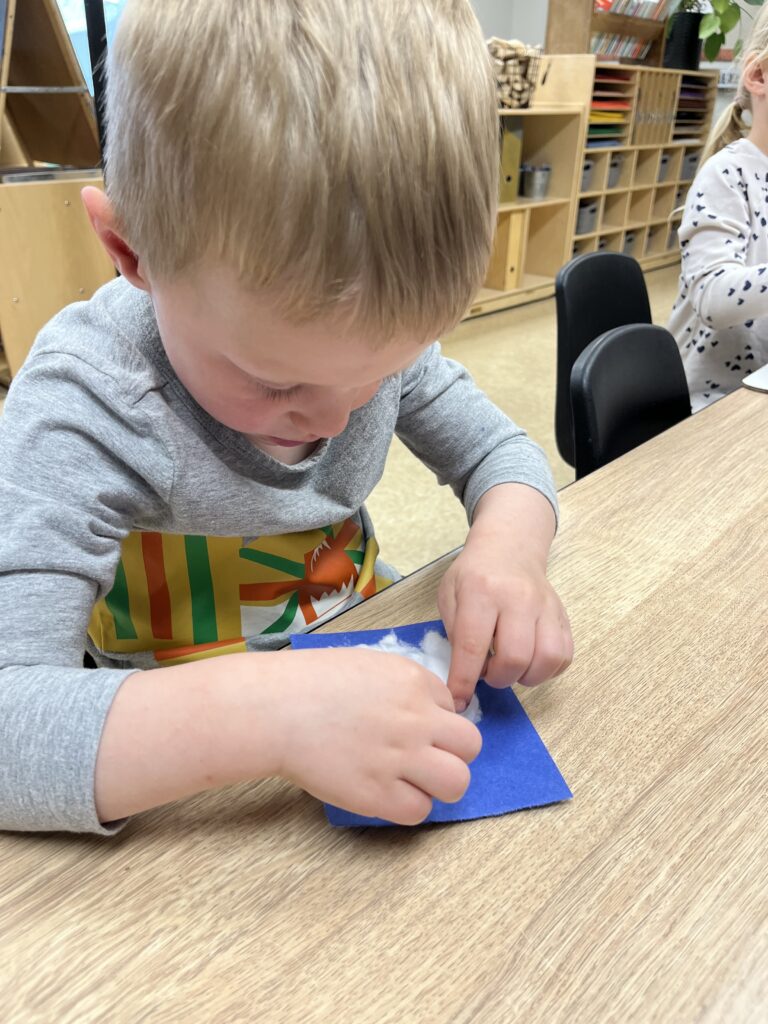
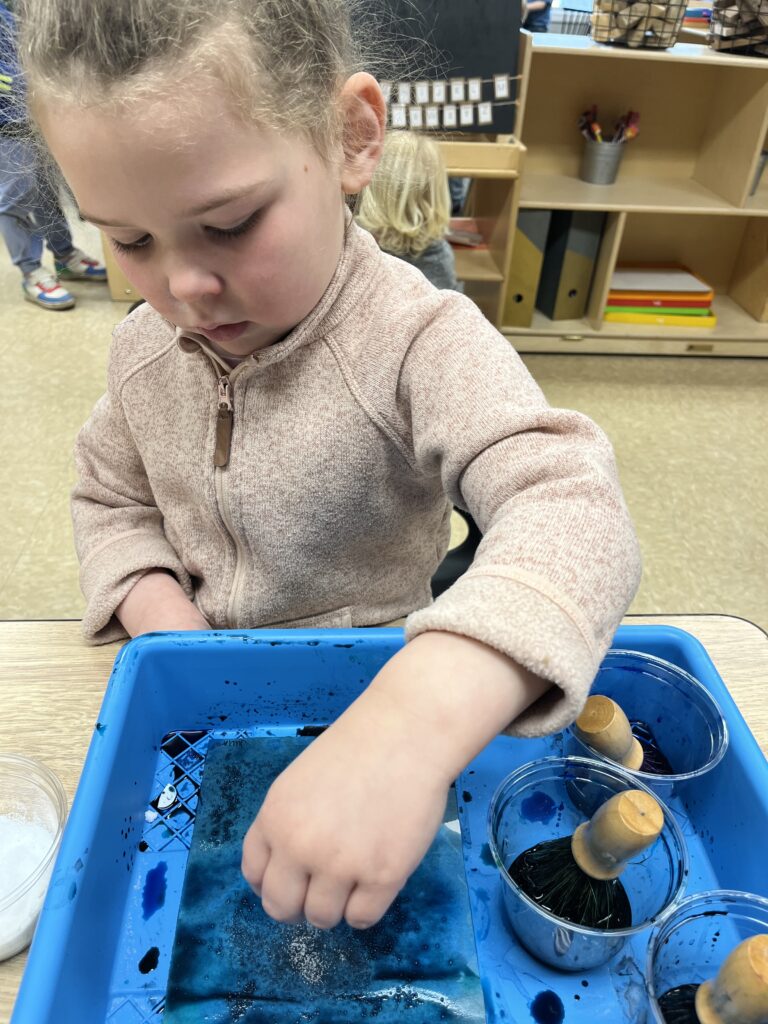
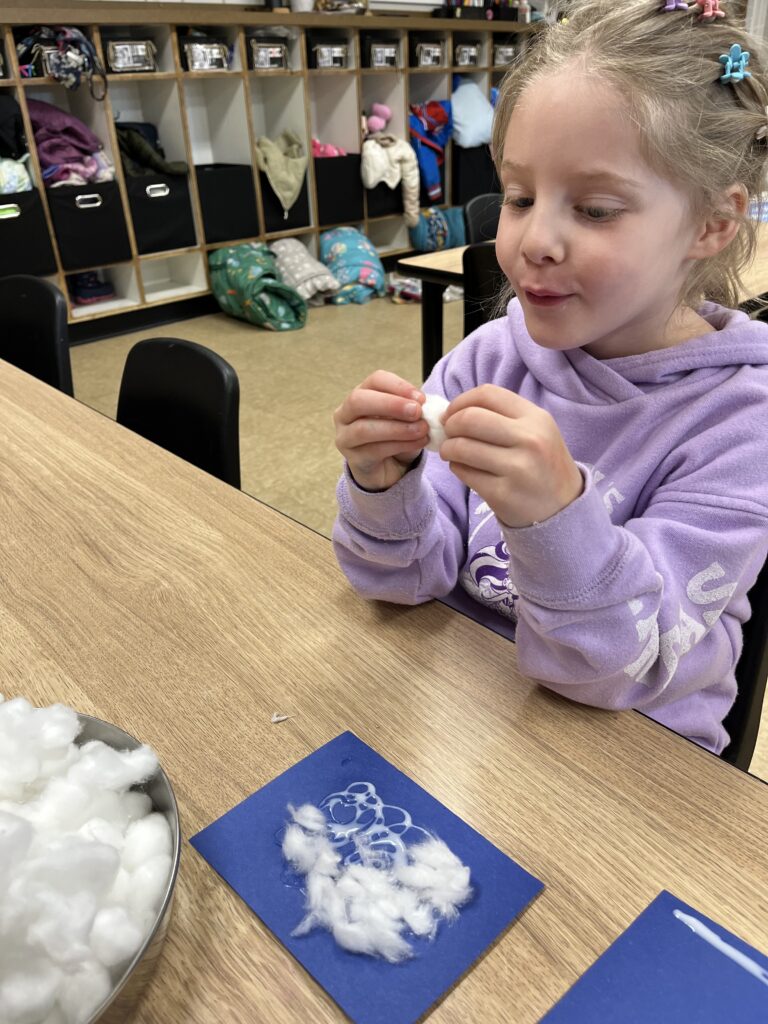
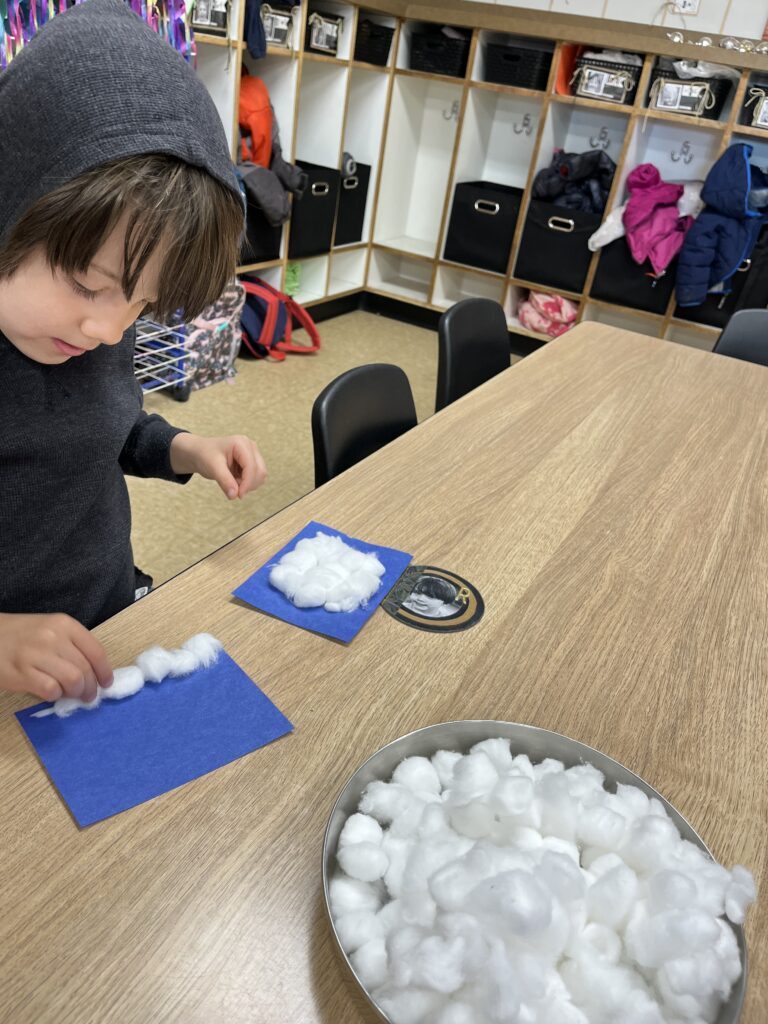
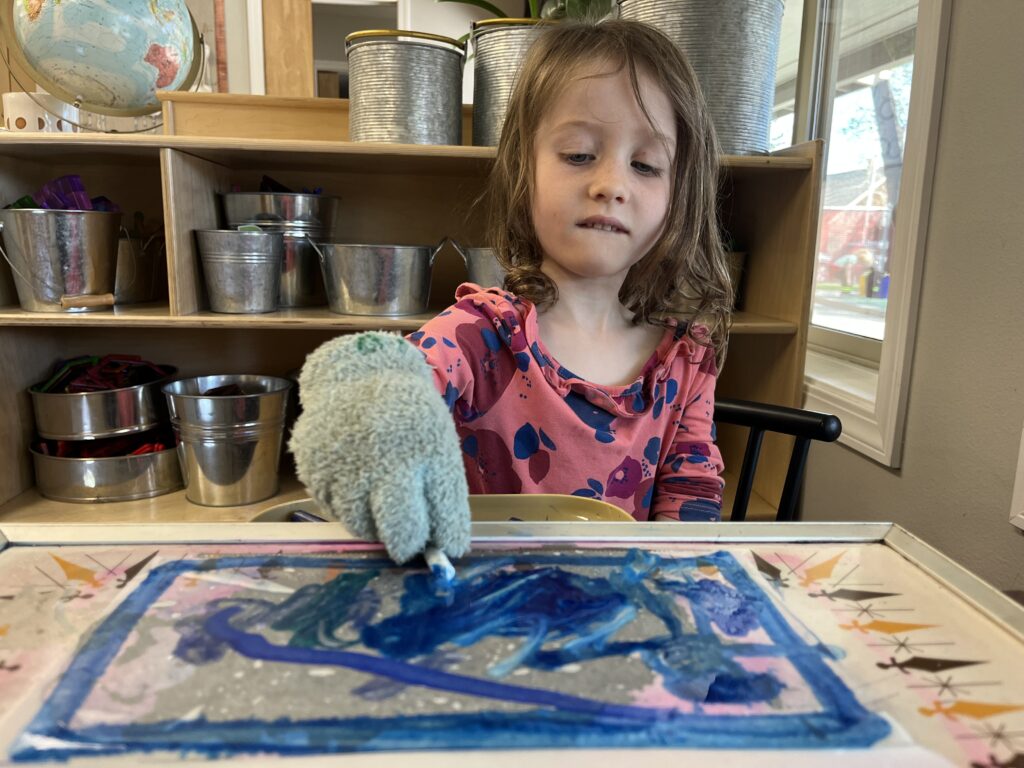
The month wouldn’t have been complete without creating some beautiful and impressive art. Using cotton balls, the Branchers made replicas of a few of the clouds we discussed during the month. This activity was not only fun but also helped them deepen their understanding of clouds and strengthen their knowledge. One of our other favorite art projects was the ‘Textured Lightning Storm’. Using black, blue, and gray liquid watercolors, each Brancher painted a dark, stormy night sky. They then pinched and sprinkled salt across the wet surface to give the paper a textured look. To add some flair, the Branchers added cotton balls and spritzed them with black-colored water to form a Cumulonimbus cloud. No lightning storm would be complete without a bolt of lightning, so that’s exactly what we included. The final product was electrifyingly awesome!
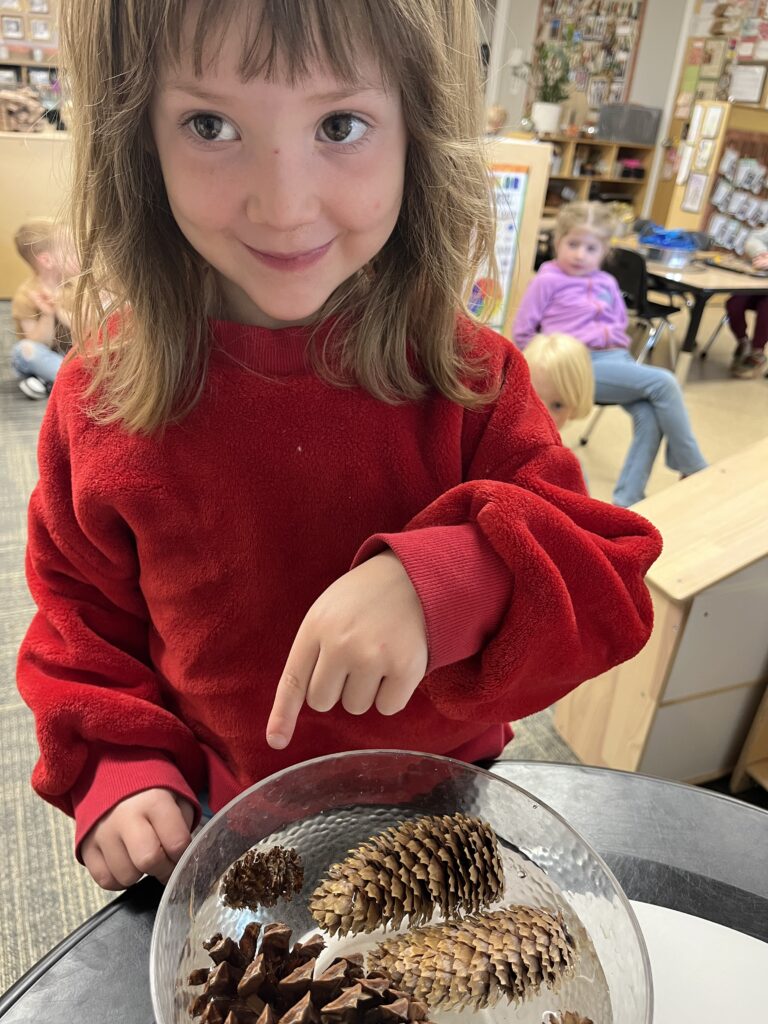
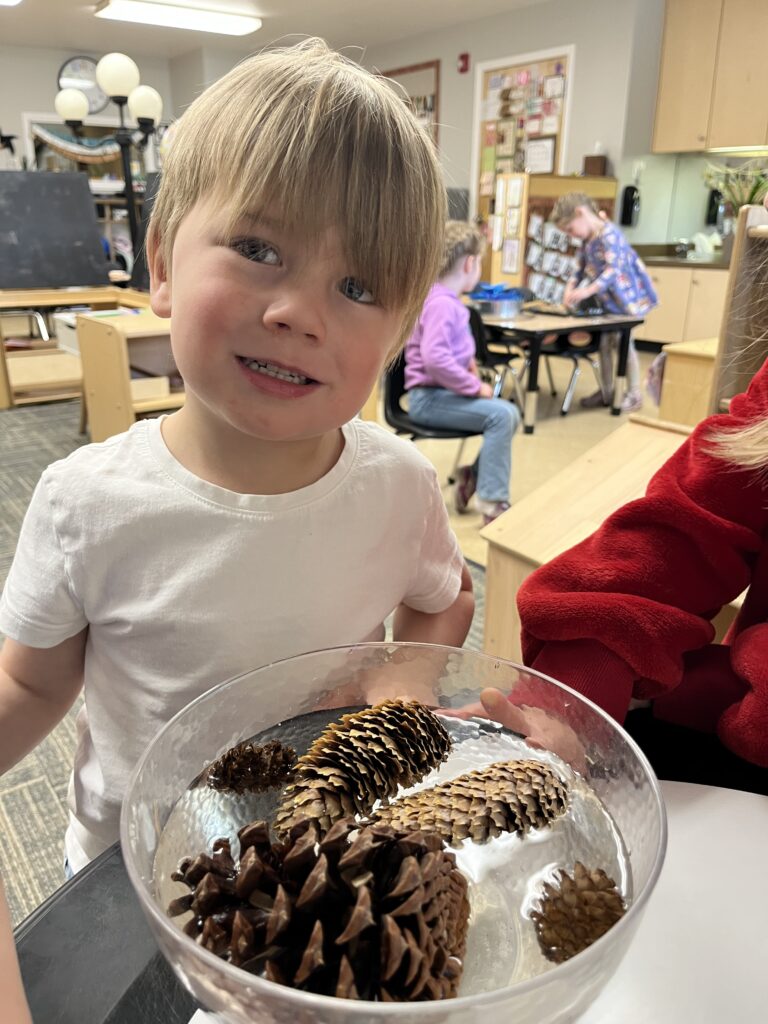
Did you know that pinecones can predict the weather? Ask your Brancher how!
As you can see, we’ve had a busy month, and it’s only going to get busier in May! You know what they say…”April showers bring May flowers!” Get your green thumb ready…we’re gardening!
-Ms. Heather & Ms. Gracen